Recently, I found myself reading another childcare fantasy story, particularly within the Rofan (romance fantasy) genre, and I noticed something interesting about why I enjoy these stories so much.
The story begins with a little girl born into a royal family. Her father is the emperor, but her mother is only a lower-ranking concubine, which means she enters the palace already standing at a disadvantage. The emperor favors another daughter born to a more powerful consort, and despite the fact that these characters are only children, the palace politics around them are already cruel.
The favored princess, who is only around seven years old, becomes a threat to the five-year-old girl, leading to a scheme that should have ended in her execution.
But that is where the story takes a turn.
The soul of a woman from the modern world transmigrates into the young princess’s body at the very moment she is about to die. Suddenly, this is no longer a story about a helpless child waiting for someone to save her. It becomes the story of someone who understands danger, understands people, and slowly learns how to survive a world that had already decided she did not deserve to exist.
What I find fascinating about these stories is not necessarily the revenge or the political battles. It is the small moments.
The first time her father notices her.
The moment a family member chooses to protect her.
The realization that someone who was treated as disposable can become precious to the very people who ignored her.
There is something incredibly satisfying about watching a child who was unwanted slowly become the center of a family’s affection.
And that is something I have noticed about many childcare Rofan stories. They often follow the same emotional pattern. The child arrives in a family where they are neglected, feared, hated, or misunderstood, and the entire story revolves around watching the relationships around them transform.
The cold father softens.
The protective uncle appears.
The servants who once ignored them become loyal.
The people who looked down on them slowly begin to recognize their value.
In a way, the real romance of these stories is not always romantic love. It is belonging.
However, one thing I have always wondered about this genre is whether it knows when to end.
Many of these stories continue chapter after chapter, focusing on the child’s daily life, her interactions with the royal family, and the conflicts around her. The problem is that childcare as a genre is built around childhood itself. The innocence, dependency, and emotional healing are what make the story appealing.
So I often ask myself: what happens when the child grows up?
When she becomes an adult, gets married, and leaves the palace, is it still the same story?
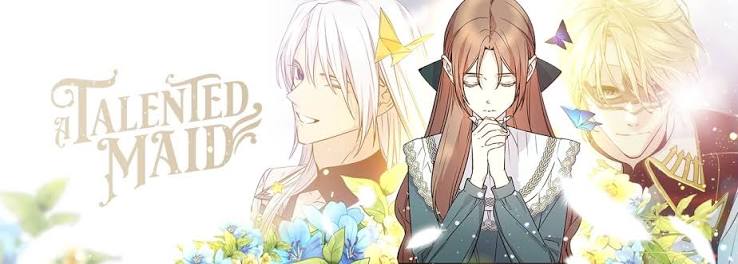
Interestingly, I have seen this done before in another fantasy story. A young girl was brought into a noble household to become the future fiancée of a viscount’s son. The boy suffered from severe insecurities because of a scar he carried and spent much of his childhood hiding himself from others.
She entered the household as an outsider but slowly became someone the entire family loved. As they grew older, their childish companionship developed into genuine love. She struggled with her feelings because she believed her status as a commoner made her unworthy of him, but eventually, she came to understand that her kindness and character were what made her worthy all along.
That story did something I rarely see. It allowed the characters to grow up.
It allowed the childcare aspect to become the foundation of something larger.
And I think that is why these stories have begun to inspire me as a writer.
When I first encountered these genres, I thought the appeal was simply the cuteness of watching a child being spoiled by powerful adults. But the more I read, the more I realized the true heart of these stories is transformation.
A child transforms a family.
A broken person learns they are loved.
Someone who was abandoned finds a home.
And perhaps that is why these stories are so addictive.
Because no matter whether the setting is an imperial palace, a noble estate, or a fantasy kingdom, the question at the center remains the same:
“What happens when someone who was never meant to be loved finally finds people who choose them?”