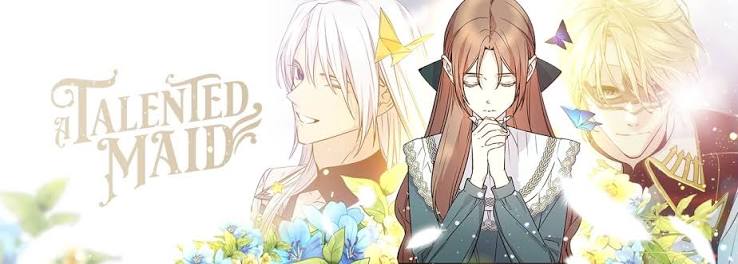
When I started reading A Talented Maid, I thought I knew exactly what kind of story I was getting into.
A simple noble household story. A capable maid who slowly becomes indispensable to a noble family. The relationships between the siblings, the nobles, the servants, and the politics between marquises, dukes, and counts. I expected a story where she would slowly stop feeling like just a servant and become a member of the family in everything but title.
That was the story I had already created in my head.
But the more I read, the more I realized I had misunderstood what the story was trying to tell.
The maid was not just a maid. She was a forgotten royal, a princess who survived the destruction of her kingdom because nobody noticed her existence. She hid among the people who had conquered her homeland and worked in the very empire that had erased her family.
And suddenly, the story changed.
It wasn’t about a household that found a talented maid.
It was about a woman rebuilding herself.
What fascinated me the most was how the story felt less like a grand tale about everyone around her and more like a personal diary. A record of her growth. A journey that says, “This is who I was. This is what happened to me. This is who I became.”
The world still exists around her. The nobles, the empire, the politics, and the people she meets all matter. But they feel like pages in her journal rather than the main focus of the book.
I find that perspective interesting because it made me reflect on my own writing.
I have a story called Dear Diary on Wattpad. While it follows three different characters and their journeys as orphans, reading The Capable Maid made me think about how different stories choose their center. Some stories are about an entire world and the people within it. Others are about a single person walking through that world and documenting the changes inside themselves.
Neither approach is wrong.
They simply create two completely different experiences for the reader.
And maybe that’s what I love the most about reading. Sometimes a story isn’t just entertainment. Sometimes it quietly teaches you a new way to tell your own.