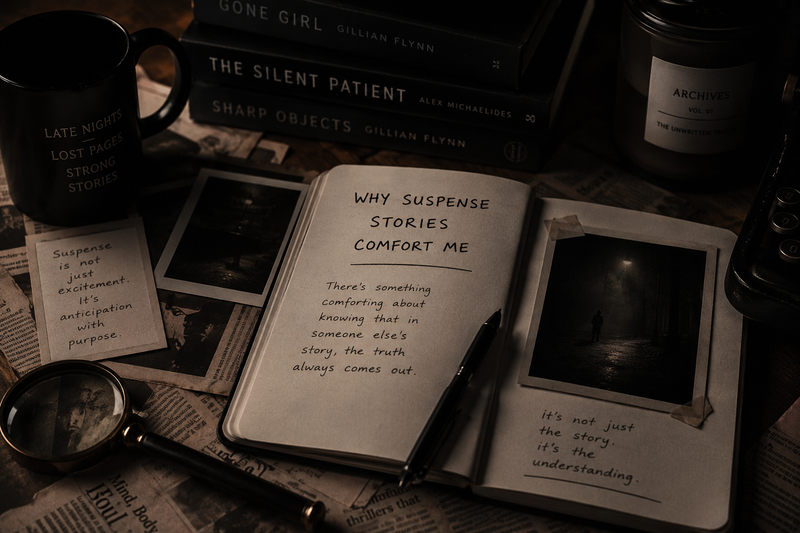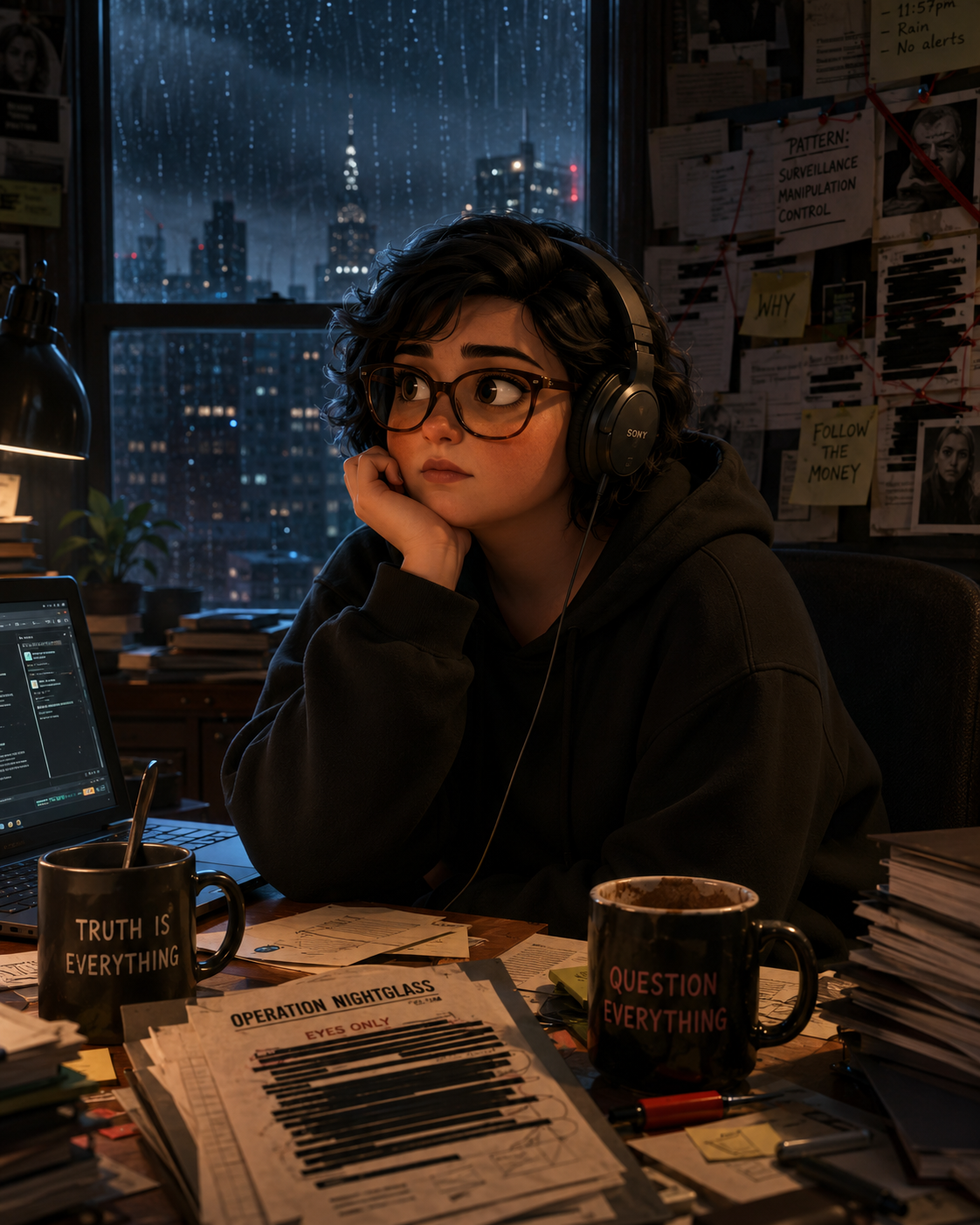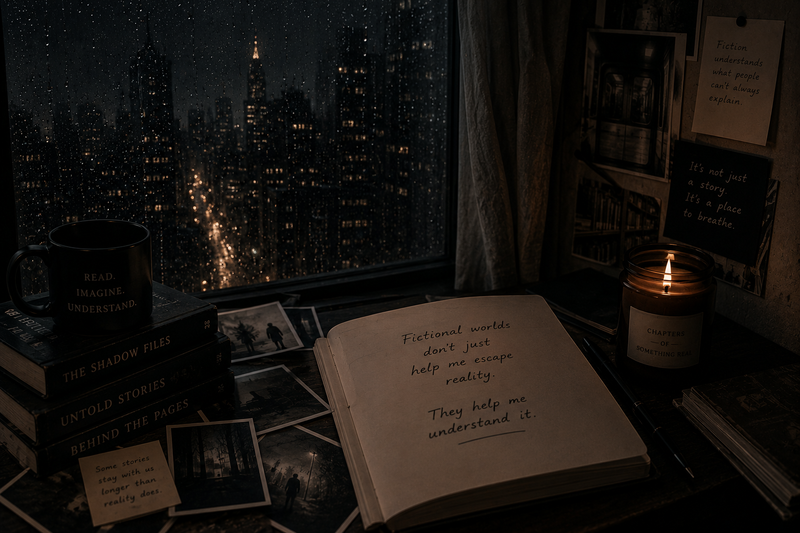
I have always found it interesting how people talk about fictional worlds as if they’re “escapes,” as though stepping into them means you’re trying to avoid reality completely.
And maybe sometimes that’s true.
But I don’t think that’s the full story.
Because for me, fictional worlds have never just been places to hide from reality completely. Most times, they’ve actually helped me understand reality better.
Which is ironic considering some of the things I consume involve:
- corrupt organizations,
- emotionally unavailable detectives,
- morally questionable protagonists,
- suspiciously attractive villains,
- and people making absolutely terrible decisions in dimly lit alleyways.
Not exactly educational material on paper.
And yet somehow, these stories stay with me longer than most motivational speeches ever do.
I think fictional worlds create a safe space for emotions that are difficult to process in real life.
A suspense story can explore paranoia, loneliness, fear, trust, obsession, identity, grief, ambition, emotional exhaustion, or vulnerability… but because it’s wrapped inside fiction, your brain lets its guard down a little.
You experience the emotion without feeling directly exposed by it.
That’s powerful.
I have noticed that some of the stories I connect with the most aren’t always the happiest ones. They’re usually the stories where characters are quietly trying to figure themselves out while the world around them feels unstable.
Characters who notice too much.
Think too much.
Feel disconnected from people around them while still craving connection.
Characters who carry emotional tension internally even when they appear calm externally.
I think those kinds of stories resonate because they feel emotionally honest.
Not polished.
Not perfect.
Just honest.
And honestly, there’s something comforting about seeing emotions represented in ways that feel recognizable, even inside fictional worlds.
I also think fictional worlds allow people to become versions of themselves they may not fully access in real life.
Someone shy in real life might feel brave while reading fantasy stories.
Someone emotionally overwhelmed might feel understood through psychological dramas.
Someone creatively exhausted might suddenly feel inspired after watching a beautifully written scene at 1AM and whispering to themselves:
“Okay… that was ridiculously good.”
Meanwhile their sleep schedule is actively collapsing in the background.
But still.
Worth it.
One thing I’ve especially realized over the years is that atmosphere matters to me almost as much as plot itself.
There are fictional worlds I remember not because of what happened in them, but because of how they felt.
Rain against apartment windows.
Quiet train stations at night.
Library archives.
Foggy streets.
Late-night diners.
Dim hallways.
Old files stacked on desks.
The silence before someone says something important.
Those details stay with me.
Sometimes more than the ending itself.
And I think that’s partly why I became so emotionally attached to storytelling aesthetics over time. Not just stories as entertainment, but stories as emotional environments.
Places you mentally step into for a while.
Places that somehow understand feelings you haven’t fully explained to yourself yet.
I know some people see fiction as “not real,” but honestly, I think stories affect people more deeply than we admit sometimes.
A fictional sentence can stay in someone’s mind for years.
A character can change the way someone views loneliness.
A scene can make someone feel understood during a period of their life where nothing else really reaches them emotionally.
That’s not small.
That’s powerful.
And maybe that’s why I keep returning to fictional worlds over and over again.
Not because I’m trying to disappear from reality.
But because sometimes stories help organize emotions that real life leaves messy.
They give shape to things that are difficult to explain directly.
And sometimes, in a very strange way, fictional worlds end up feeling emotionally safer than the real one for a little while.
Not because they’re perfect.
But because they understand human emotion enough to let people feel seen inside them.