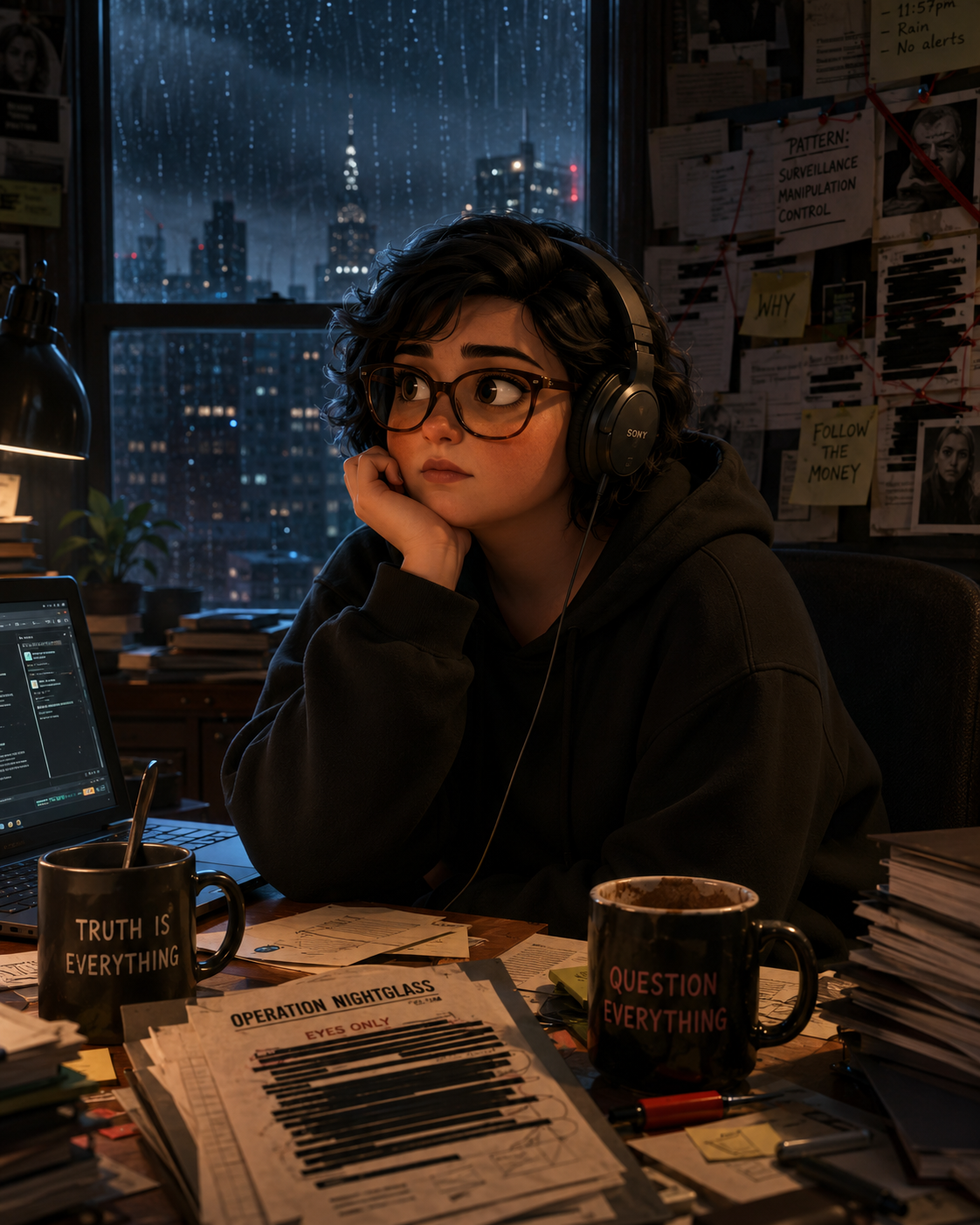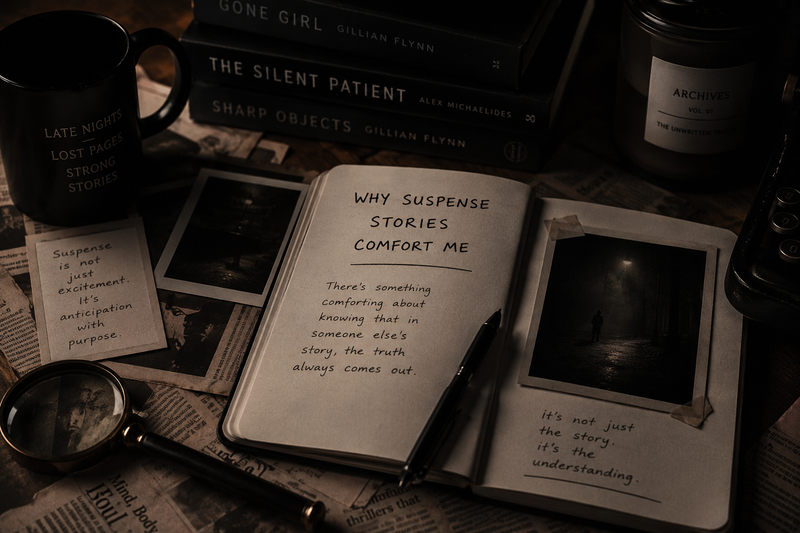
There’s something slightly concerning about the fact that after a stressful day, some people relax with soft acoustic music and candle-making videos… while I relax by watching fictional characters uncover conspiracies at 2AM in dimly lit apartments.
Honestly, I’ve stopped questioning it.
At some point, I realized suspense stories were never really “stressful” to me. They were comforting. Which sounds absurd when you think about it too hard because why exactly does watching someone get followed through rain-soaked alleyways feel calming? Why does a mysterious phone call in a psychological thriller somehow lower my blood pressure?
I genuinely don’t know.
But I think part of it comes from the structure of suspense itself.
In real life, emotions are messy. Confusion sits there without explanation. People say things they don’t mean. Situations happen without closure. Sometimes life just throws ten tabs open in your brain and refuses to let any of them close properly.
Suspense stories, on the other hand, promise that there is something underneath the confusion.
A clue.
A hidden truth.
A reason.
Even when everything feels chaotic, the story quietly whispers: Pay attention. It all connects eventually.
And maybe that’s comforting.
I’ve always loved stories where people notice things others ignore. The subtle shift in someone’s tone. The document left slightly out of place. The long silence after a question. The feeling that something in the room is wrong even if nobody else notices it yet.
Not because I necessarily want danger in my life — absolutely not. If a mysterious black SUV parked outside my house in real life, I am not becoming the protagonist. I am closing my curtains and pretending I no longer exist.
But fictional tension feels different.
It gives emotions shape.
That’s probably why I gravitate toward psychological thrillers, investigative stories, courtroom dramas, mystery mangas, conspiracy narratives, and slow-burn suspense instead of stories that reveal everything immediately. I love stories that trust the audience enough to sit in uncertainty for a while.
There’s something immersive about piecing things together gradually.
A look.
A hallway.
Rain against a window.
A sentence that sounds normal until twenty pages later.
I think suspense stories also understand loneliness in a very specific way. A lot of protagonists in these stories are observers before they become participants. They notice things quietly. They overthink. They sit with thoughts longer than they probably should. They feel disconnected from the noise around them while still wanting connection.
That emotional space feels strangely familiar to me sometimes.
And maybe that’s why “The Erica Files” naturally became rooted in suspense aesthetics without me even forcing it. The mood, the archives, the late-night atmosphere, the quiet emotional tension — it all reflects the kinds of stories that have stayed with me over the years.
Not because I want to live inside a conspiracy board with red strings connecting photographs on the wall.
Although aesthetically? Incredible.
Emotionally? Yeah, no.
But there’s something beautiful about stories that treat emotions like puzzles worth understanding instead of inconveniences to ignore.
I think that’s the real reason suspense comforts me is that underneath all the mystery, tension, and cinematic atmosphere, most suspense stories are really about people trying to understand what’s happening around them and inside them at the same time.
And honestly?
I think a lot of us are doing that every day already.